


Pop quiz: A patient comes in with a fever, stiff neck, and killer headache. What’s your first thought? If you said meningitis, you’re already on the right track!
Meningitis NCLEX questions aren’t here to play—they’ll test if you can spot the warning signs, know the risks, and jump into the right treatment plan without missing a beat.
Meningitis is a serious infection that messes with the protective layers around the brain and spinal cord, so it’s something you need to know for both your exam and your future patients. In this post, we’re breaking it all down so you can tackle any meningitis NCLEX question with confidence.

Want more nursing content that’s actually fun to learn? Meet Blueprint’s new Complete Self-Prep Package with 23 hours of video lessons, 2,000 Qbank questions, personalized study planner, and more.🤩 Get it for FREE for 60 days!
Meningitis NCLEX Questions: The Basics
First things first: meningitis as an infection of the meninges in the brain and spinal cord.
The infection can be caused through the following four pathways:
1. Bacterial (common)
Bacterial meningitis can be severe and life-threatening if it’s not treated quickly. When untreated, bacterial meningitis can spread rapidly and cause brain damage, hearing loss, and death.
2. Viral (common)
Viral meningitis isn’t as severe as bacterial meningitis and often resolves on its own. But serious cases can occur in clients that have a weakened immune system.
3. Fungal (less common)
This kind of meningitis is rare and develops slowly. It can be serious and require a long course of treatment with anti-fungal medication.
4. Parasitic (less common)
This form of meningitis can be serious and even fatal in some cases.
Meningitis NCLEX Questions: The Signs and Symptoms of Meningitis
The signs and symptoms of meningitis can vary depending on the cause, but typically the client will display:
- The sudden onset of a fever
- Sensitivity to light
- A severe headache
- Confusion
- A stiff neck
While all of the symptoms listed above are common, the hallmark symptoms of meningitis are a headache and stiff neck.
Meningitis NCLEX Questions: Risk Factors
1. Age
Infants (especially < 1 month old) and young children are at increased risk of bacterial meningitis.
Adolescents and young adults (especially college students living in a communal setting) are at an increased risk for meningococcal meningitis.
2. Compromised immune system
Those with a compromised immune system are more susceptible to meningitis.
3. Close contact with an infected person
Anyone who has been in close contact with someone who has meningitis is at an increased risk of getting it.
4. Respiratory tract infections
A viral or bacterial infection in the lungs can lead to secondary meningitis.
5. Head or skull trauma
This can create pathways for pathogens to enter the central nervous system.
6. Not getting the recommended vaccinations
This can also put someone at risk of developing meningitis.
Meningitis NCLEX Questions: Diagnosis and Treatment
Diagnosis
Meningitis is usually diagnosed through:
- A physical assessment
- Imaging studies
- A lumbar puncture
Treatment
Bacterial meningitis→ Antibiotics
Viral meningitis → Antivirals
Fungal → Anti fungals
A Practice Meningitis NCLEX Question
Here’s a sample practice question that you might see on the NCLEX!
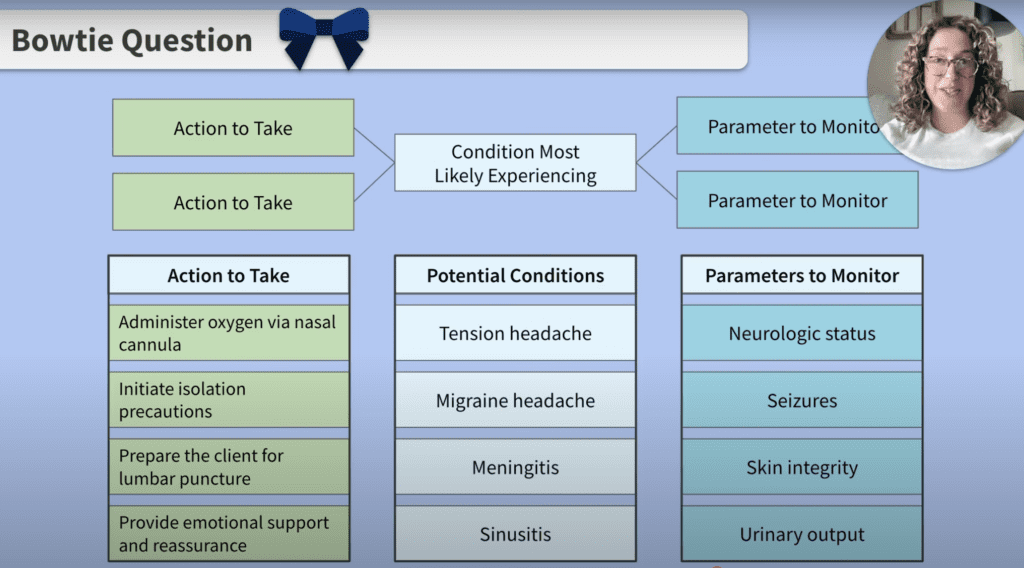
Want to see the answer? Check out the video below to see Abigael Nance (RN, BSN) break down this bowtie question!
Further Resources
So, there’s an overview on meningitis that can help you prepare for the NCLEX. But we’ve barely scratched the surface! Be sure to watch the video to get a great review of this important topic. And subscribe to the Blueprint Nursing YouTube channel, where you’ll find lots of great tips on how to get through nursing school, crush the NCLEX, and kickstart your career as a real deal RN!
For more (free!) NCLEX practice questions, check out these other posts on the blog: